Student Attendance Management System (SAMS)
RFID attendance for school colloquiums. Students tap their ID card on a USB reader instead of signing a paper sheet, and staff get the records, reports and semestral grades.
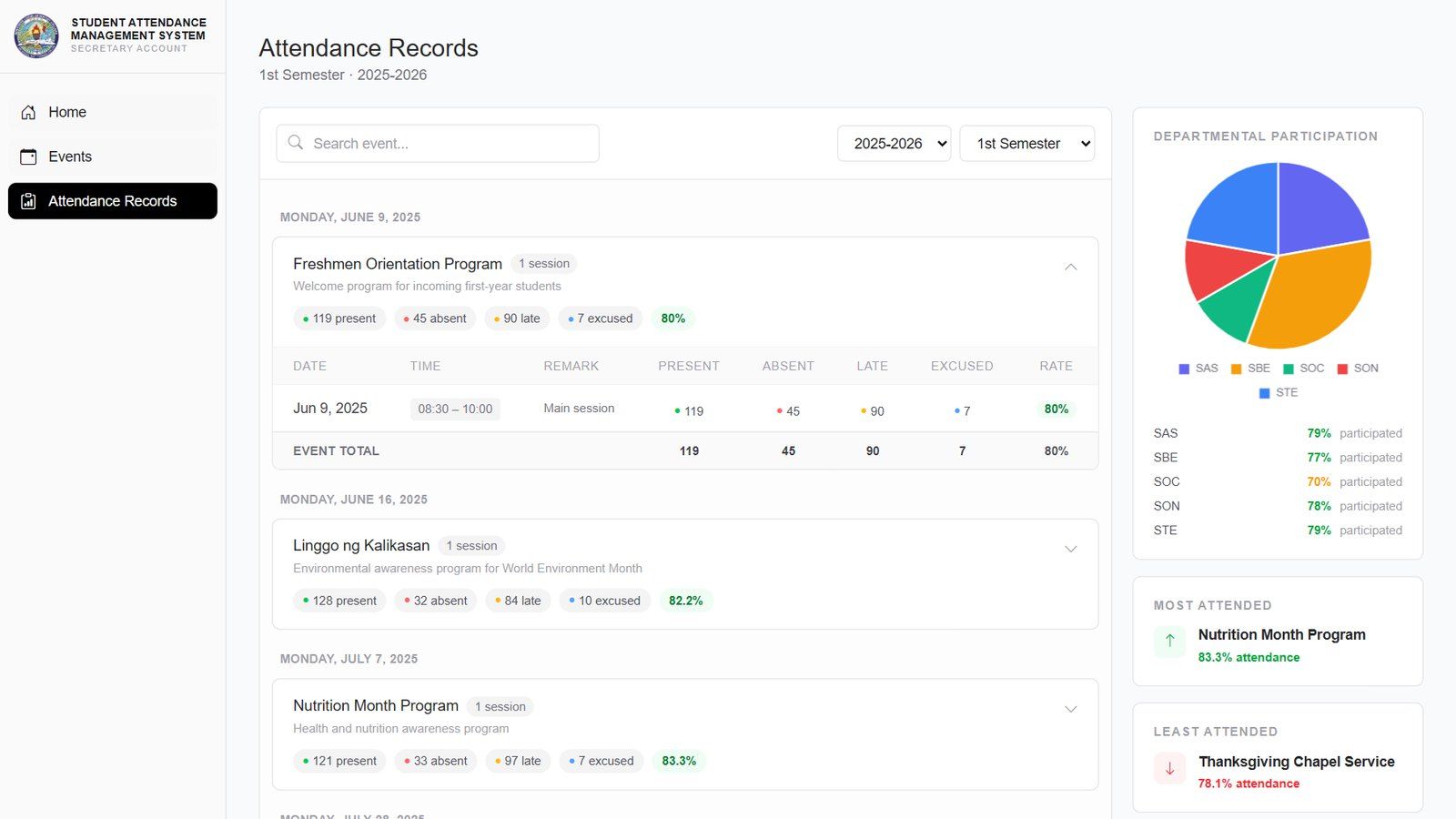
Screenshots use seeded test data, not real student records.
The problem
Attendance at school colloquiums was taken on paper sign-in sheets, then counted by hand to see who was present, late or absent.
The outcome
Students tap an RFID card on a reader at the door, and attendance, late arrivals and semestral grades are recorded and computed automatically.
Gallery
Screenshots use seeded test data, not real student records.
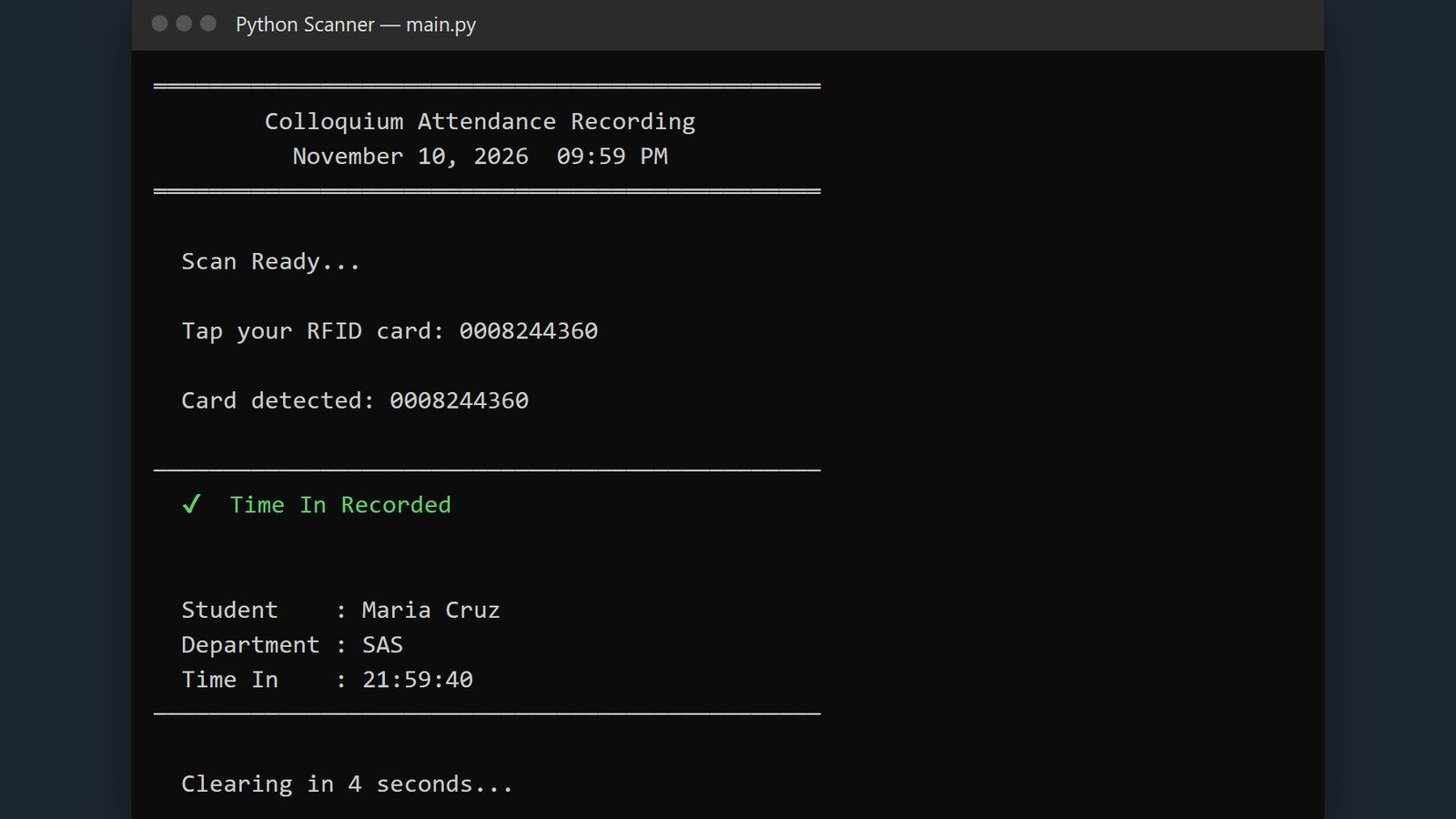
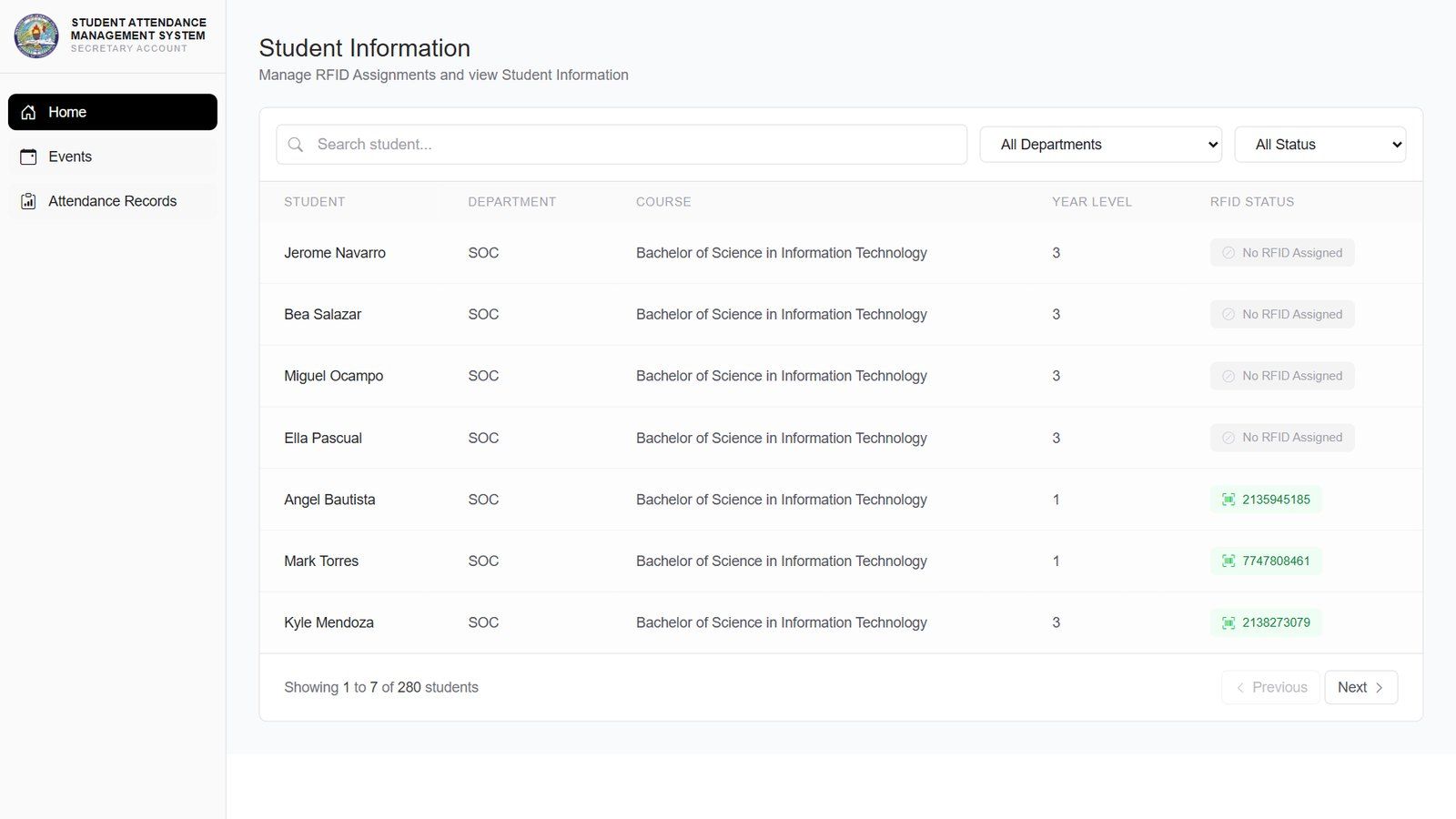
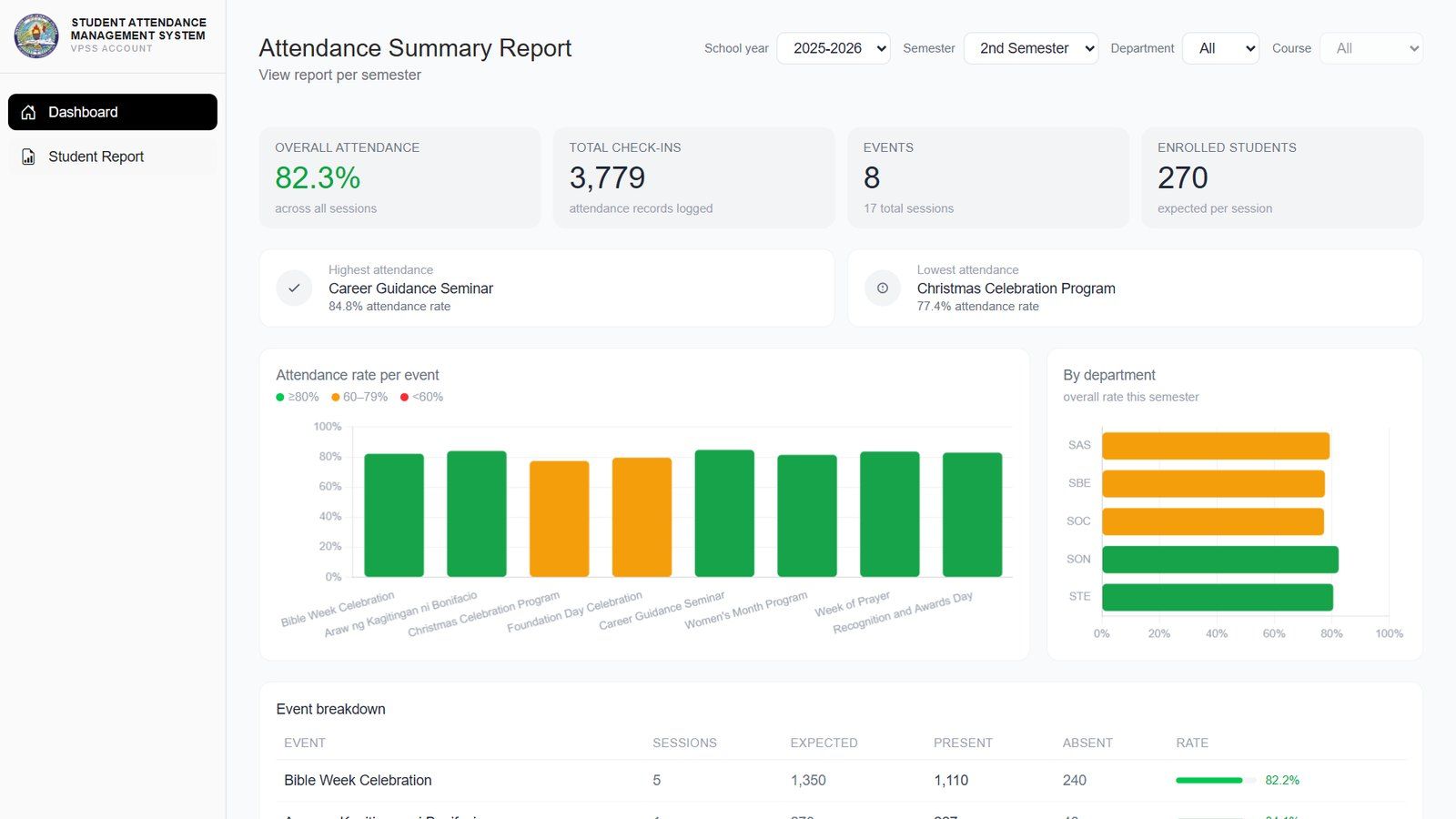
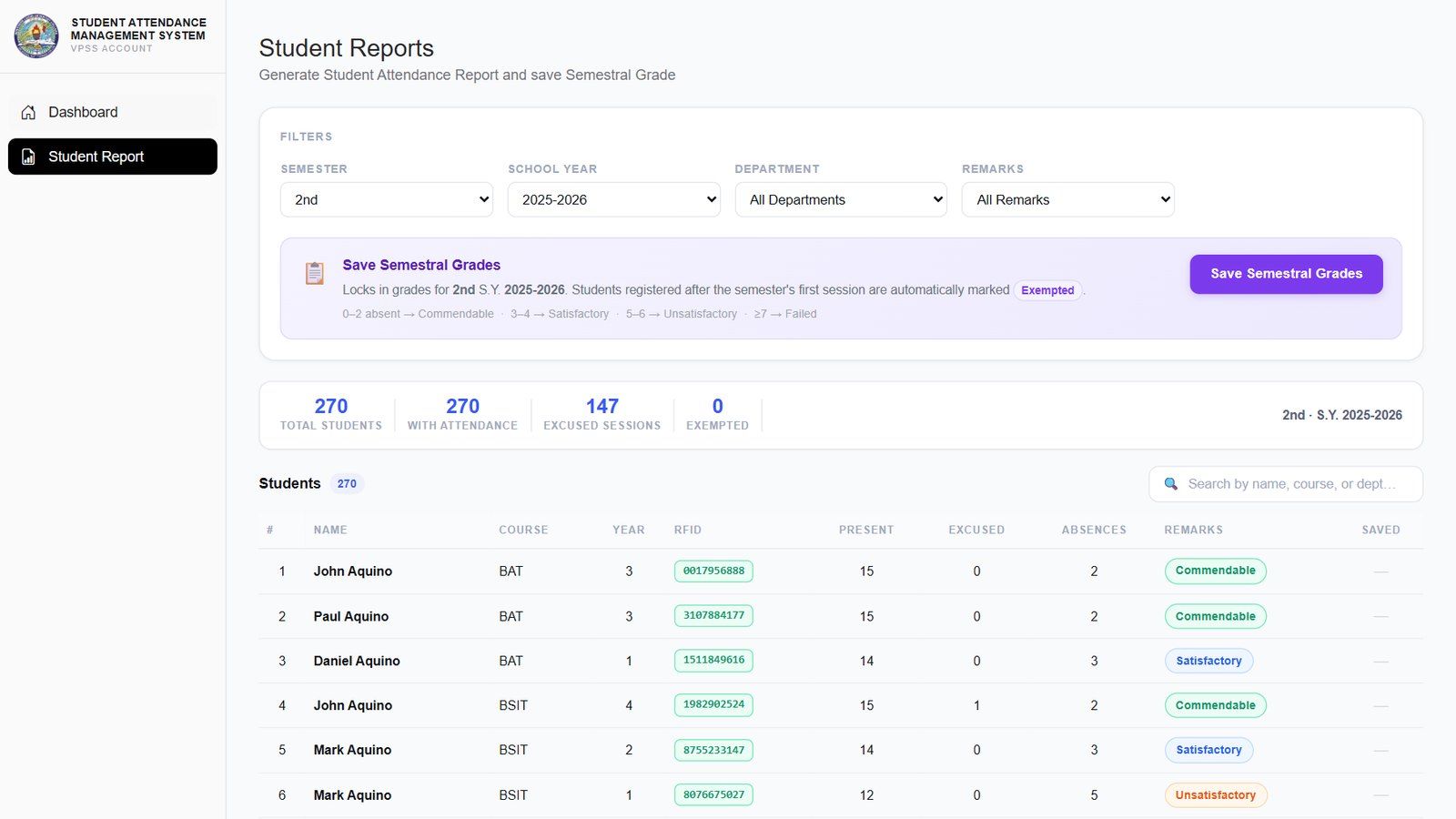
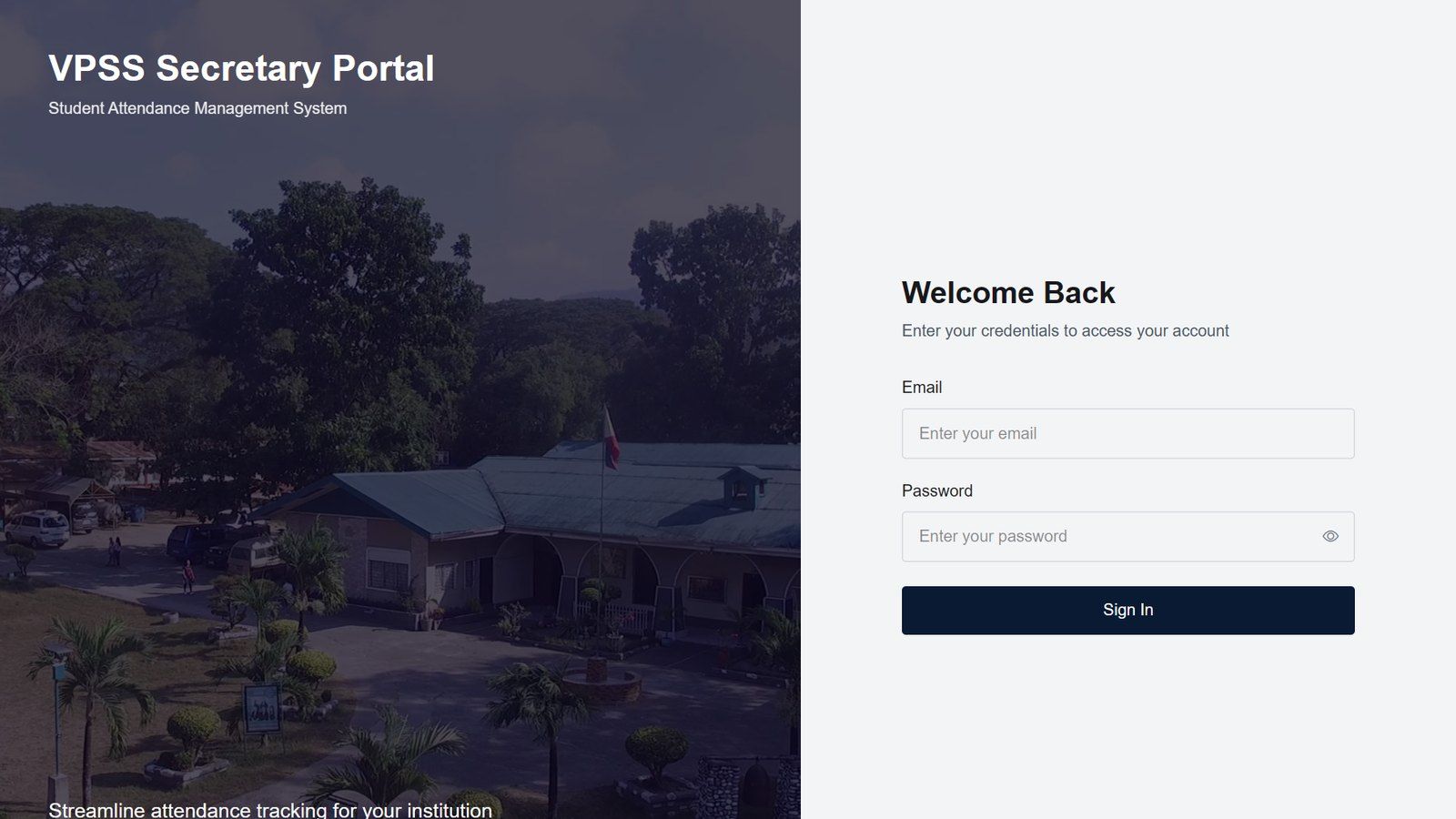
A card tap at the door, as the scanner shows it Secretary: assigning RFID cards to students VPSS: attendance summary per semester VPSS: semestral grades computed from attendance Staff sign in
The problem
Every colloquium meant a paper sign-in sheet. Afterwards someone had to count the sheets by hand to see who came, who was late and who was missing, and those counts fed into each student’s semestral grade.
How it works
- At the door: a USB RFID reader is plugged into a laptop. The reader types the card’s ID like a keyboard, and a small Python program sends it to the API and shows the result: time in, time out, late, or why a tap was rejected.
- Secretary app: creates events and their sessions, assigns RFID cards to students, records excuses, and browses attendance per event and session.
- VPSS app: sees attendance summaries per semester, department and course, and locks in semestral grades once the semester is over.
- API: Laravel with MySQL holds students, events, sessions and attendance, and applies the rules: late after the first 15 minutes, time-out only in the last 15 minutes, and excused absences that don’t count against a student.
Architecture notes
The scanner is deliberately simple. A USB RFID reader behaves like a keyboard, so the scanner only has to read a line of input and post it, with no drivers or special hardware code. All the decisions (which session is running, whether the student is late, whether it’s a time in or a time out) live in the API, so the two web apps and the scanner always agree.
Sign-in uses tokens with two roles, and each app only shows what that role is allowed to do: the Secretary manages events and cards, and only the VPSS can lock grades.
What I’d do next
Show a big, colour-coded result screen at the door instead of terminal text, so students can see from a distance whether their tap worked.